
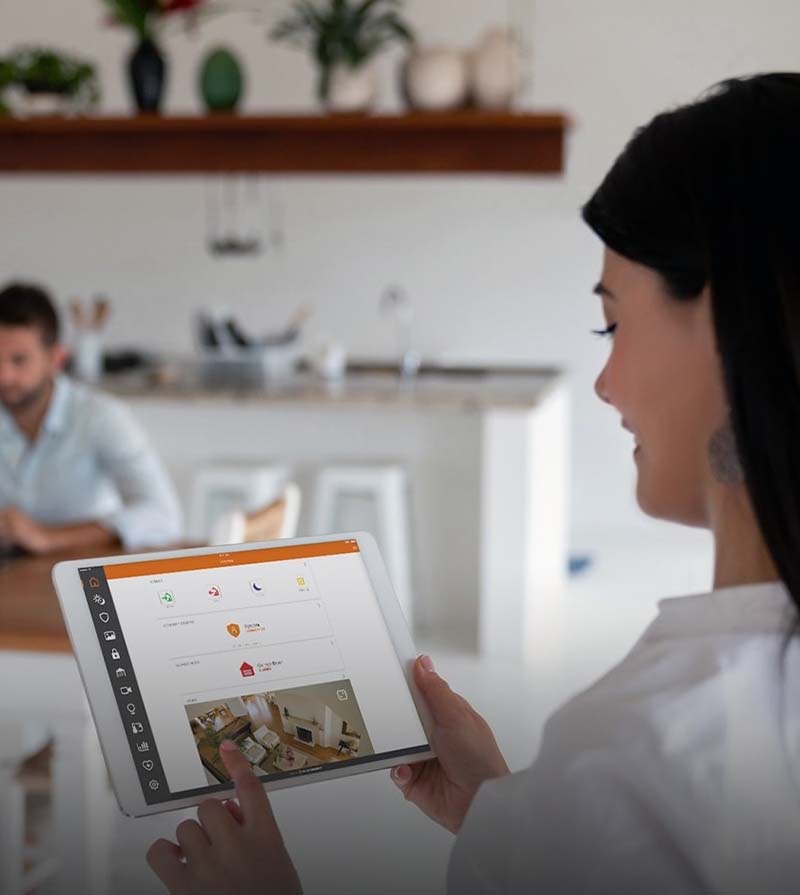
It’s 8:30 AM on a Tuesday, and Sarah glances at her phone between meetings. A gentle notification confirms what she hopes to see: her mother’s kitchen motion sensor detected activity at 7:15 AM, the kitchen light was switched on at 7:22, and the front door opened briefly at 8:00 for the morning paper. Mum’s routine is running like clockwork, 300 kilometres away. Sarah exhales with relief and returns to her work, the familiar knot of worry loosened for another day.
This scenario is becoming increasingly common across Australia as families navigate the delicate balance between ensuring their elderly parents’ safety and respecting their fierce independence. The good news? Smart home technology, particularly Alarm.com’s comprehensive smart home security systems, is transforming how we care for ageing loved ones, making proactive safety monitoring both effective and dignified.
In this article, we’ll explore how specific Alarm.com features can provide peace of mind for families whilst enabling elderly parents to maintain the independence they cherish in their own homes.
Contents
- 1 The Changing Landscape of Elderly Care in Australia
- 2 Proactive Safety Features for Elderly Care
- 3 Customisable Alert Systems
- 4 Real-Life Application: A Day in the Life
- 5 Getting Started with Blu Sky Security powered by Alarm.com for Elderly Care
- 6 Peace of Mind for the Entire Family
- 7 Taking the Next Step
The Changing Landscape of Elderly Care in Australia
Australia’s population is ageing rapidly. According to the Australian Bureau of Statistics, by 2057, approximately 22% of Australians will be aged 65 and over. This demographic shift brings with it a fundamental challenge: how do we ensure our elderly loved ones remain safe whilst honouring their desire to age in place?
Traditional care solutions often present a difficult choice, either move elderly parents into assisted living facilities or rely on periodic check-ins that leave significant gaps in monitoring. Neither option fully addresses the needs of families who want real-time awareness without compromising their parents’ autonomy.
This is precisely where smart home technology fills a crucial gap. Modern systems like Blu Sky Security powered by Alarm.com offer a middle path: comprehensive, proactive monitoring that operates quietly in the background, alerting families only when patterns deviate from the norm. It’s care that’s present without being intrusive, watchful without being overbearing.
Proactive Safety Features for Elderly Care
Activity Monitoring Through Smart Sensors
One of the most powerful aspects of Alarm.com’s ecosystem is its ability to create a detailed picture of daily routines through strategically placed sensors. Unlike cameras that can feel invasive – door, window, and motion sensors provide activity confirmation whilst preserving privacy.

How it works in practice:
Motion or Door sensors placed in bedrooms, bathroom entries, and main living areas can track movement patterns throughout the day. When combined with Alarm.com’s intelligent automation platform, these sensors create a baseline of normal activity. You’ll know when Mum gets up in the morning, when she’s moving about the house, and when she’s settled in for the evening.
The real value emerges in the exceptions. If there’s been no motion in the hallway by 10:00 AM on a day when your parent typically rises at 7:30, you’ll receive an alert. If there’s no kitchen activity during usual meal preparation times, the system can notify you. These aren’t false alarms, they’re meaningful deviations that might indicate a fall, illness, or other situation requiring attention.
Real-world example: Consider motion sensors in hallways and main living areas. If your father typically walks to the kitchen every morning between 7:00-8:00 AM, the system learns this pattern. On a morning when no motion is detected in these areas, you receive a text notification allowing you to check in via phone or video. This proactive approach means you’re aware of potential issues within hours, not days.
Video Monitoring with Privacy in Mind
Video monitoring often raises concerns about privacy and dignity, understandably so. However, Alarm.com’s video solutions offer flexible options that respect boundaries whilst providing valuable visibility when needed.
Strategic implementation:
Rather than monitoring private spaces like bedrooms or bathrooms, video cameras can be positioned in common areas such as the living room, kitchen, or main hallway. This approach allows you to:
- Conduct quick visual check-ins without being intrusive
- Verify that your loved one is moving about comfortably
- Observe any changes in mobility or behaviour that might indicate health concerns
- Use two-way audio for brief conversations, reducing feelings of isolation
The video doorbell feature deserves special mention. For elderly parents, unexpected visitors can be concerning. With Alarm.com’s video doorbell, they can see who’s at the door, regardless of a visitor pressing the doorbell button. The two-way audio means you can speak to delivery drivers, carers, or visitors even when your parent is unable to reach the door quickly.
Privacy-first approach: The key is transparency and consent. Involve your elderly parents in decisions about camera placement, ensure they understand when and how video is accessed, and establish clear guidelines about privacy zones. Many families find that strategically placed cameras in one or two common areas provide sufficient visibility.
Smoke detection:

Alarm Monitored smoke detectors do more than sound a local alarm, they send immediate alerts to family members’ mobile devices, regardless of location. If your mother’s smoke detector activates at 2:00 AM, you’re notified instantly and can call to check on her or contact emergency services if she doesn’t respond.
Smart Locks and Access Control
Managing access to an elderly parent’s home becomes increasingly important as care needs evolve. Alarm.com’s smart lock integration solves multiple challenges simultaneously.
Remote lock control:
No more worrying about whether Dad remembered to lock the door at night. With smart locks, you can check lock status remotely and secure the home with a tap on your smartphone. This feature proves invaluable when your parent’s memory becomes less reliable or when they struggle with the physical act of operating traditional locks.
Activity logs and peace of mind:
Smart locks create a detailed access log showing exactly when doors are locked, unlocked, and by whom. This information helps you understand your parent’s coming-and-going patterns. Did Mum go out for her morning walk? Did the carer arrive on time? Has anyone entered the home unexpectedly? These questions are answered automatically through access logs.
Temporary access codes:
As care needs increase, various service providers, housekeepers, meal delivery services, carers, nurses, may require home access. Rather than hiding keys under flowerpots or distributing copies to multiple people, you can create temporary access codes that work during specific time windows.
For example, create a code for the Monday-Wednesday-Friday carer that works only between 9:00 AM and 11:00 AM on those days. The code automatically expires outside these parameters, and you receive notifications each time it’s used. This system eliminates hidden keys whilst maintaining complete control over who enters the home and when.
Emergency access protocols:
In situations requiring immediate access, medical emergencies, welfare checks, or other urgent circumstances, you can unlock doors remotely for emergency services or family members, eliminating precious time wasted searching for keys or forcing entry.
Lighting Automation for Fall Prevention
Falls represent one of the most serious risks facing elderly Australians. The Australian Institute of Health and Welfare reports that falls are the leading cause of injury-related hospitalisations among older people. Strategic lighting automation significantly reduces this risk.
Pathway lighting schedules:
Alarm.com allows you to create lighting schedules that ensure safe passage throughout the home during high-risk times. Hallway lights can automatically illuminate at sunset and remain on until sunrise. Bathroom pathway lighting can activate during typical night-time hours, guiding your parent safely without the need to fumble for switches in the dark.
Motion-activated lighting:
Motion sensors paired with smart lights create responsive illumination that activates when movement is detected. When your father gets up during the night, lights automatically brighten along his path to the bathroom, reducing stumbling risks in unfamiliar darkness. The lights can be programmed to dim gradually rather than switching off abruptly, ensuring safe return to bed.
Customisable Alert Systems
The true intelligence of Alarm.com’s platform lies in its customisable notification system. Rather than overwhelming you with constant updates, the system learns routines and alerts you only when meaningful patterns are disrupted.
Personalised notification schedules:
You can tailor alerts to match your parent’s unique daily rhythm. If your mother typically watches the morning news programme with her bedroom light on from 6:30-7:30 AM, the system recognises this pattern. If the light doesn’t activate by 8:00 AM, you receive a notification. These aren’t arbitrary alerts, they’re intelligent observations based on established behaviours.
Multi-user access for family coordination:
Multiple family members can access the Alarm.com system with different permission levels. Perhaps you monitor daily activity notifications whilst your sibling receives only emergency alerts. Your parent might have full control over cameras and privacy settings whilst you manage sensors and environmental monitoring. This flexibility ensures appropriate oversight without overwhelming any single person.
Escalation protocols:
You can establish tiered response protocols. A first-level alert might prompt a phone call to your parent. If they don’t answer within a specified timeframe, the alert escalates to additional family members. Continued lack of response triggers contact with a neighbour, keyholding friend, or emergency services. This structured approach ensures timely response without unnecessary panic.
Real-Life Application: A Day in the Life
Let’s follow how these features work together through a typical day for Margaret, an 82-year-old widow living independently in suburban Brisbane, monitored lovingly by her daughter Jessica who lives in Melbourne.
7:15 AM: Margaret’s bedroom door sensor registers opening. Jessica, having her morning coffee before work, sees the notification and smiles, Mum’s up at her usual time.
7:30 AM: Motion detected in the kitchen proceeding normally.
8:45 AM: The front door opens and closes. Jessica knows this is Margaret’s morning walk around the block. The door lock automatically secures behind her, a setting they programmed together.
9:20 AM: Margaret returns home. Door unlocked via her personal access code, then re-locked. Jessica receives no notification, everything is routine.
10:00 AM: The carer arrives, using her temporary Wednesday-morning access code. Jessica receives a notification confirming the carer’s arrival, as requested.
11:30 AM: Carer departs. Margaret’s lunch-time routine begins, kitchen activity detected.
2:30 PM: Something unusual, the bathroom motion sensor shows extended occupancy, longer than typical patterns. Jessica’s phone alerts her to the deviation. She calls Margaret, who explains she’s giving the bathroom a thorough clean. Crisis averted, but Jessica appreciates the heads-up.
6:00 PM: Evening routine commencing. Living room lights activate on schedule as Adelaide’s winter evening sets in.
9:45 PM: “Goodnight” scene initiates, all doors confirm locked status, outdoor lights on, indoor lights dimming, temperature adjusted. Jessica receives confirmation that everything is secure.
Throughout this day, Jessica worked a full shift, attended meetings, and lived her life, all whilst maintaining awareness of her mother’s wellbeing. Margaret maintained complete independence, privacy, and dignity. The technology worked silently in the background, notable only when patterns deviated from the norm.
Getting Started with Blu Sky Security powered by Alarm.com for Elderly Care
Implementing a comprehensive monitoring system needn’t be overwhelming. A thoughtful, staged approach ensures success.
Initial needs assessment:
Begin by evaluating your specific situation:
- What are your primary safety concerns?
- What is your parent’s current mobility and cognitive status?
- Which daily activities provide the best monitoring indicators?
- What privacy boundaries must be respected?
- Who else should have system access?
Scalable solutions:
One of Blu Sky Security powered by Alarm.com’s greatest strengths is its scalability. You needn’t install everything at once. Many families begin with basic door sensors and environmental monitors, adding features as comfort with the technology grows or as care needs evolve. This gradual approach allows elderly parents to adapt without feeling overwhelmed by sudden technological intrusion.
Professional installation:
Professional installation offers significant advantages for elderly care applications:
- Optimal sensor placement based on your home’s layout
- Comprehensive system testing and verification
- Detailed training for all users
- Ongoing technical support
- Integration with professional monitoring services if desired
Training all users:
Ensure everyone understands their role in the system. Elderly parents should know how to operate smart locks, respond to sensors if needed, and understand what’s being monitored. Family members need training on interpreting alerts, accessing appropriate features, and responding to notifications. Clear documentation and simple quick-reference guides help everyone feel confident.
Ongoing adjustments:
Needs change over time. Schedule regular reviews, perhaps quarterly, to assess whether the current configuration still serves its purpose. As mobility decreases, additional sensors might be warranted. As comfort with technology grows, features previously deemed intrusive might become acceptable. The system should evolve alongside changing circumstances.
Peace of Mind for the Entire Family
The true measure of Blu Sky Security powered by Alarm.com’s value in elderly care isn’t found in technical specifications or feature lists, it’s measured in the quiet confidence families gain knowing their loved ones are safe.
For elderly parents, these systems provide reassurance that help is available if needed whilst preserving the independence they value. They can continue living in familiar surroundings, maintaining routines that provide comfort and meaning, knowing that someone is watching over them without hovering over them.
For adult children, the constant low-level anxiety that accompanies having elderly parents living alone finally eases. Instead of wondering “Is Mum okay?” throughout the workday, you know she’s following her normal routine. The mental burden of constant worry lifts, replaced by data-driven confidence punctuated only by meaningful alerts.
For the broader family, these systems facilitate shared caring responsibilities. Multiple siblings can coordinate oversight, distribute notification responsibilities, and ensure someone is always aware of their elderly parent’s status without any single person bearing the full weight of worry.
Taking the Next Step
Caring for ageing parents represents one of life’s most profound challenges, balancing our deep desire to protect those who once protected us with respect for their autonomy and dignity. Smart home technology, particularly Alarm.com’s comprehensive platform, offers a path forward that honours both imperatives.
These systems don’t replace human connection, regular visits, or meaningful engagement. Instead, they enhance our ability to provide appropriate care whilst respecting independence. They transform anxiety into awareness, worry into watchfulness, and reactive responses into proactive prevention.
If you’re navigating the complex journey of ensuring your elderly parents’ safety whilst honouring their independence, Blu Sky Security powered by Alarm.com’s monitoring solutions deserve serious consideration. The peace of mind they provide, for both generations, is genuinely priceless.
Ready to explore how smart home monitoring can support your family’s unique care needs?
Contact Blu Sky Security today on (08) 9468 6103 to schedule a complimentary consultation. We’ll assess your specific situation, discuss your concerns, and design a monitoring solution that provides comprehensive safety whilst respecting the dignity and independence your loved ones deserve. Because caring for those we love should be both effective and effortless.
The information in this article is intended for general guidance only. Every family’s situation is unique, and monitoring solutions should be customised to individual needs, preferences, and circumstances. Always involve elderly family members in decisions about monitoring technologies, and consult with healthcare professionals regarding specific care requirements.